How to film a temperature: one house, one long day and a $1M Kickstarter launch for Moera
Moera's Smart Climate Mattress Cover raised $1M in its first 12 hours on Kickstarter. On camera, though, it looks like a mattress cover. The whole value is temperature, and a camera can't see temperature.
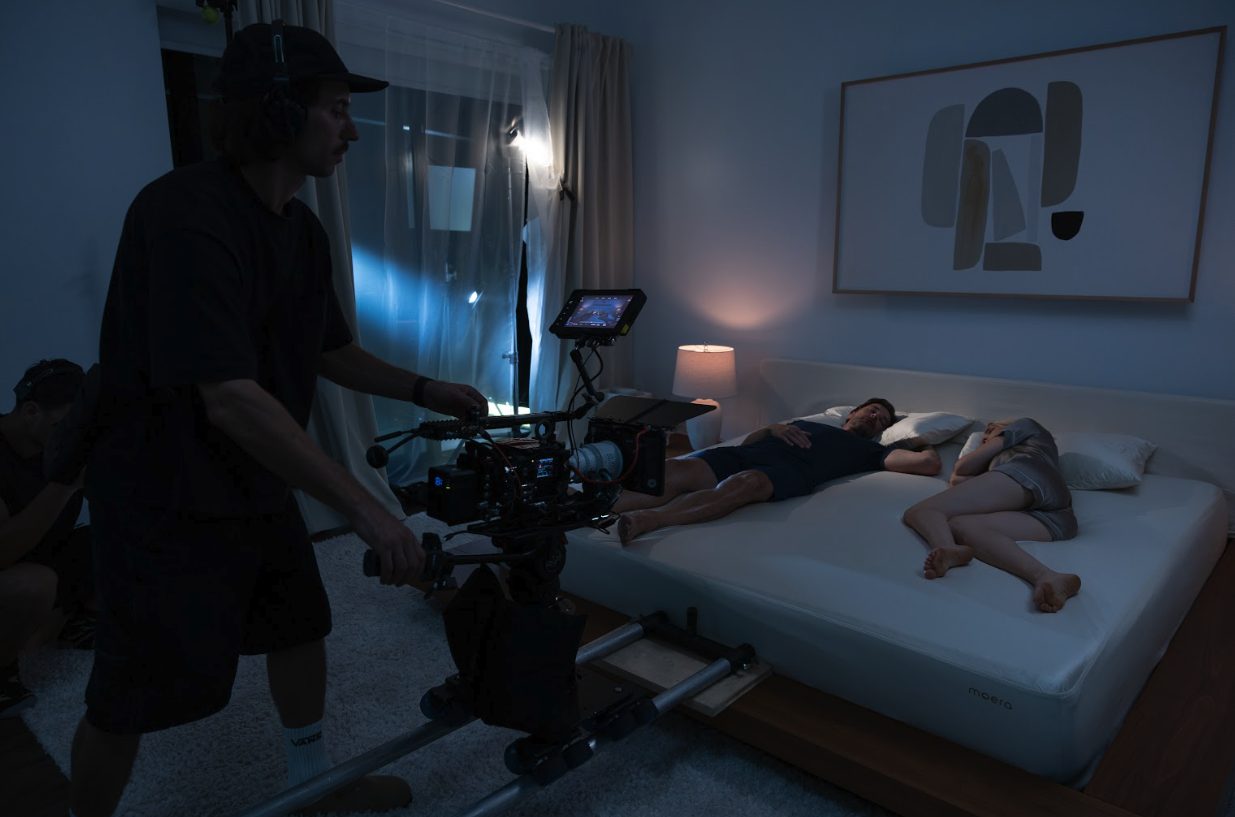
The task
Moera lets each side of the bed keep its own temperature. Backers had to understand in seconds that two people can sleep at 72°F and 82°F in the same bed. We made the launch together with New Waves, the agency that ran Moera's crowdfunding campaign: they owned the campaign, we owned the film and the content.
Our treatment set one goal: make the viewer feel the temperature before they understand the product.
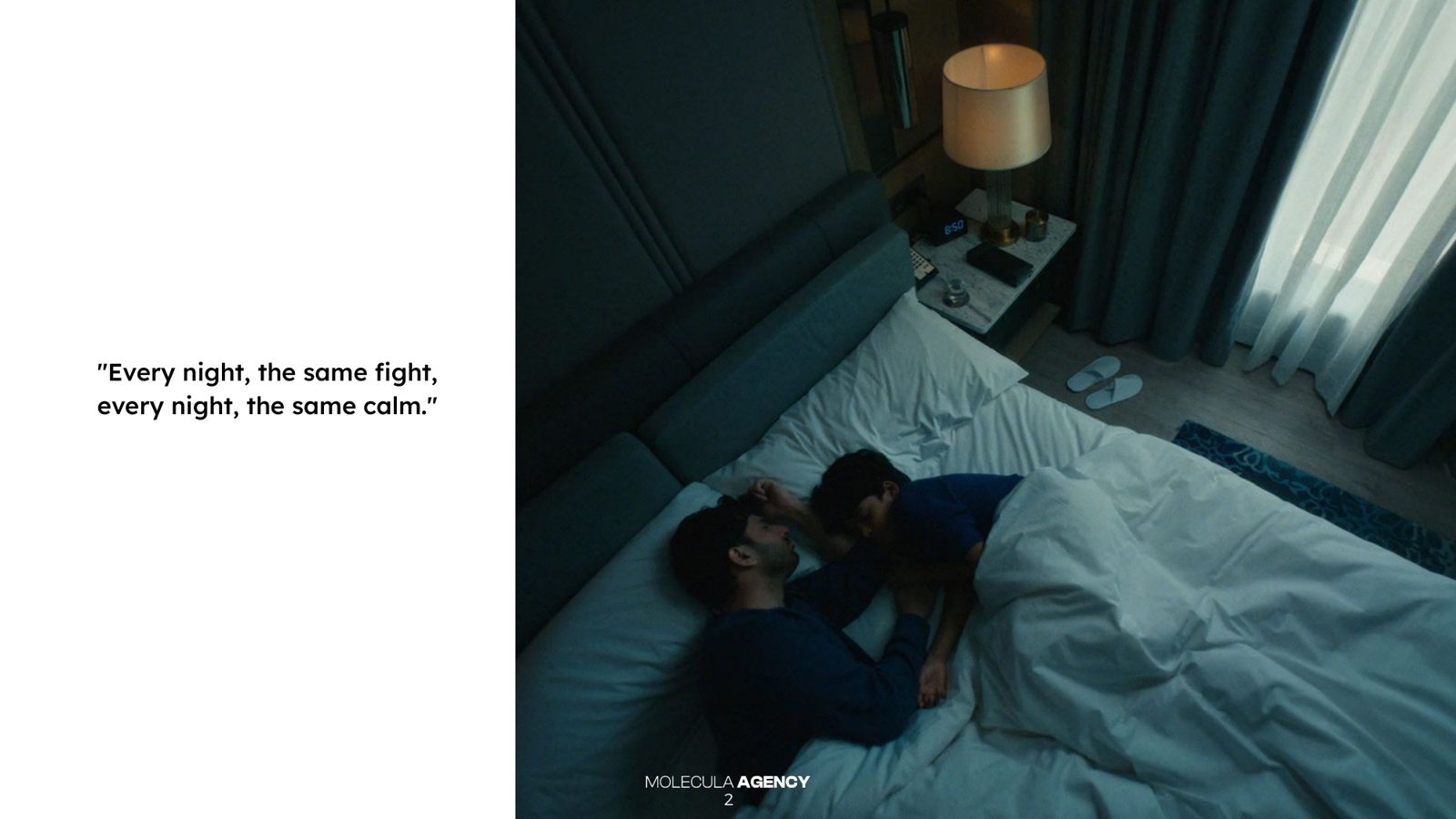
Two temperatures in every frame
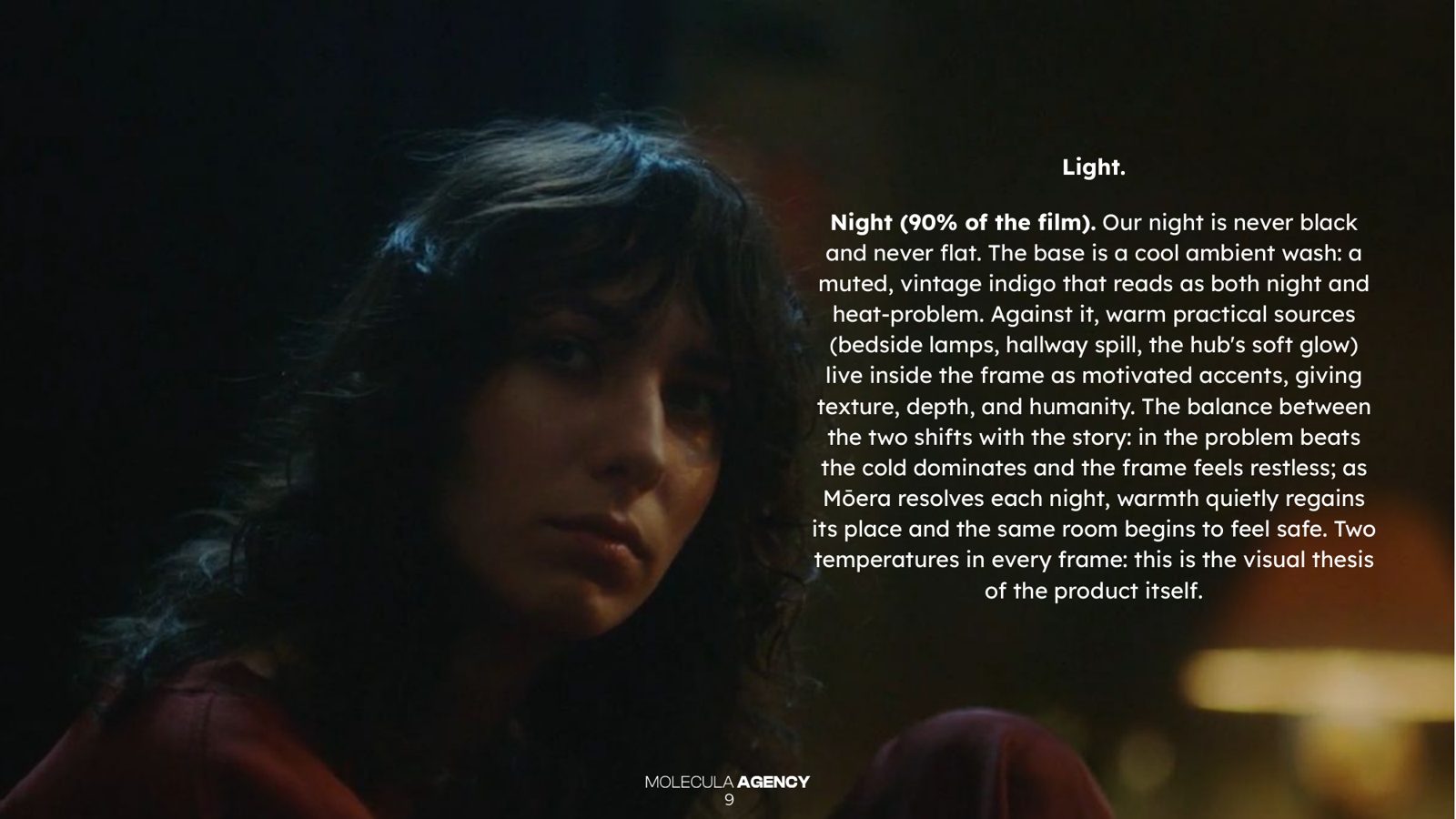
Ninety percent of the film happens at night, so the light had to carry the story. The base of every night shot is a cool, muted indigo that reads as both night and heat problem. Inside it live warm accents: a bedside lamp, light from the hallway, a sliver on bare skin. In the problem beats the cold dominates. As Moera solves each night, the warmth comes back and the same room starts to feel safe.
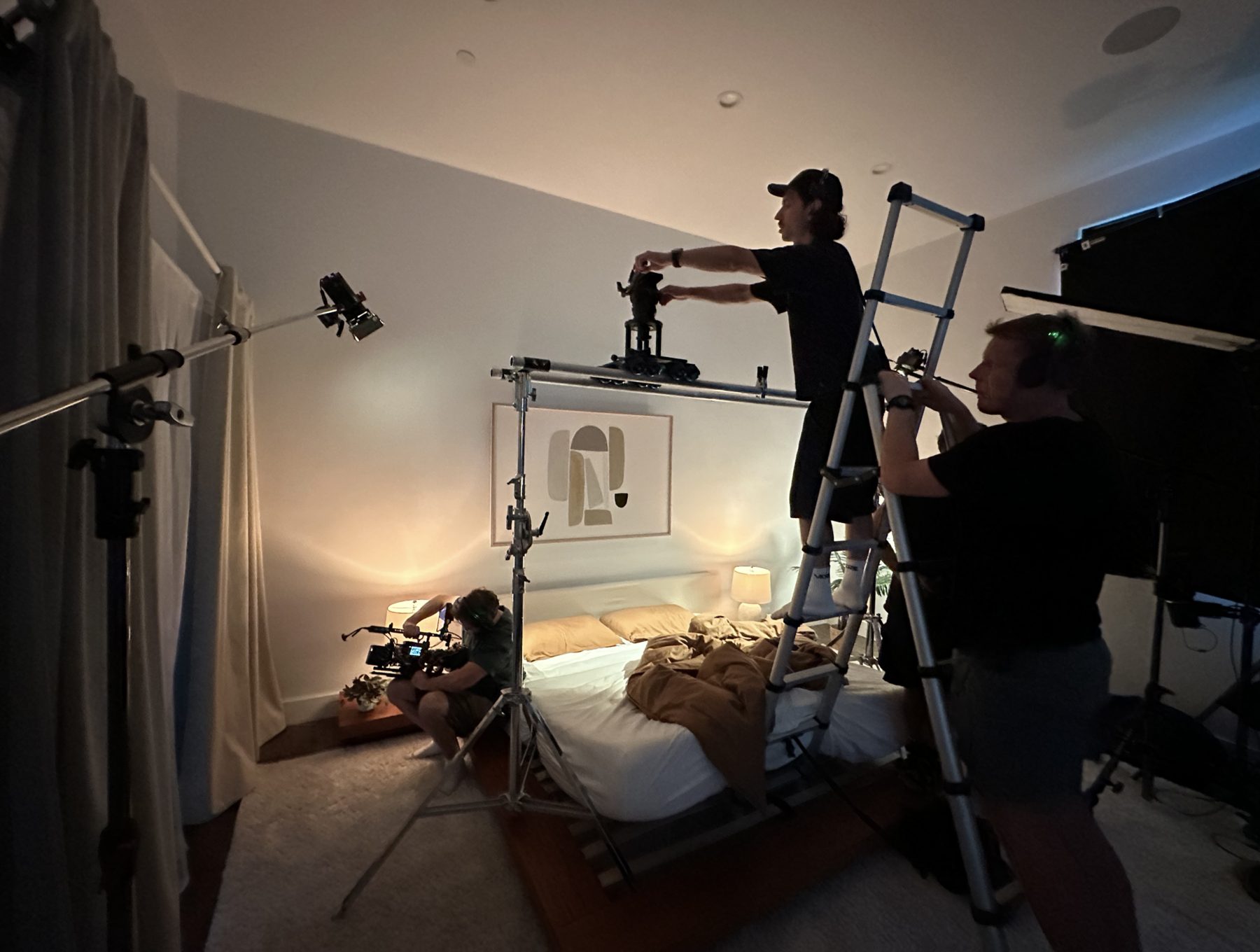
The camera follows the same logic. The calm parts move slowly, on sliders and locked frames. Rough handheld appears only in short bursts, for the sweaty night and the kicked-off sheets, so when the calm returns you feel the relief.
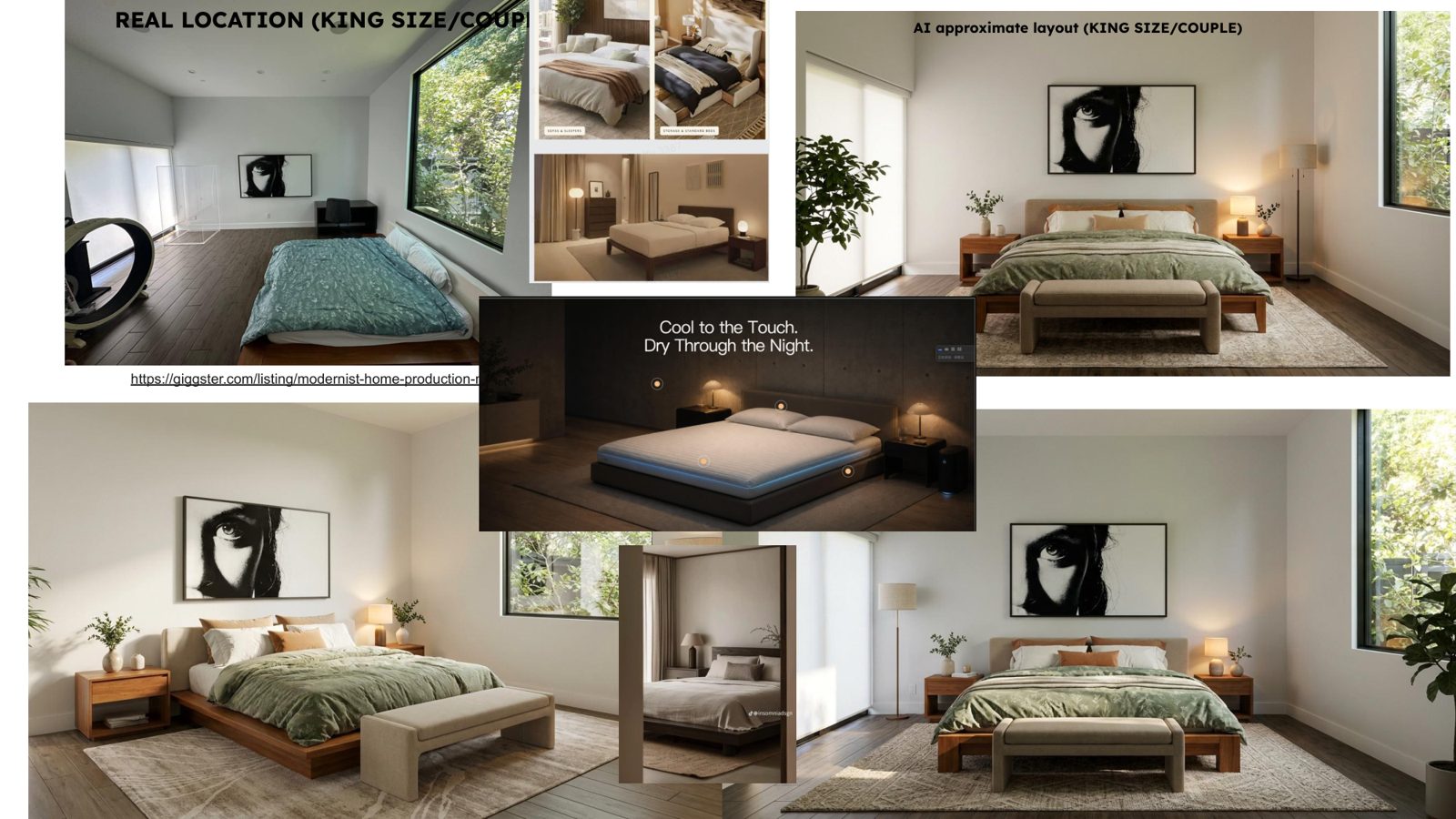
The location, designed before the shoot
We found a modernist house in Los Angeles with two bedrooms that matched the two worlds of the film: a warm room for the couple and a darker one for the single man. Before the shoot we built an AI approximation of each room, with the bed, the props and the palette, so the client could see the set while it was still a listing.
One house, one long day
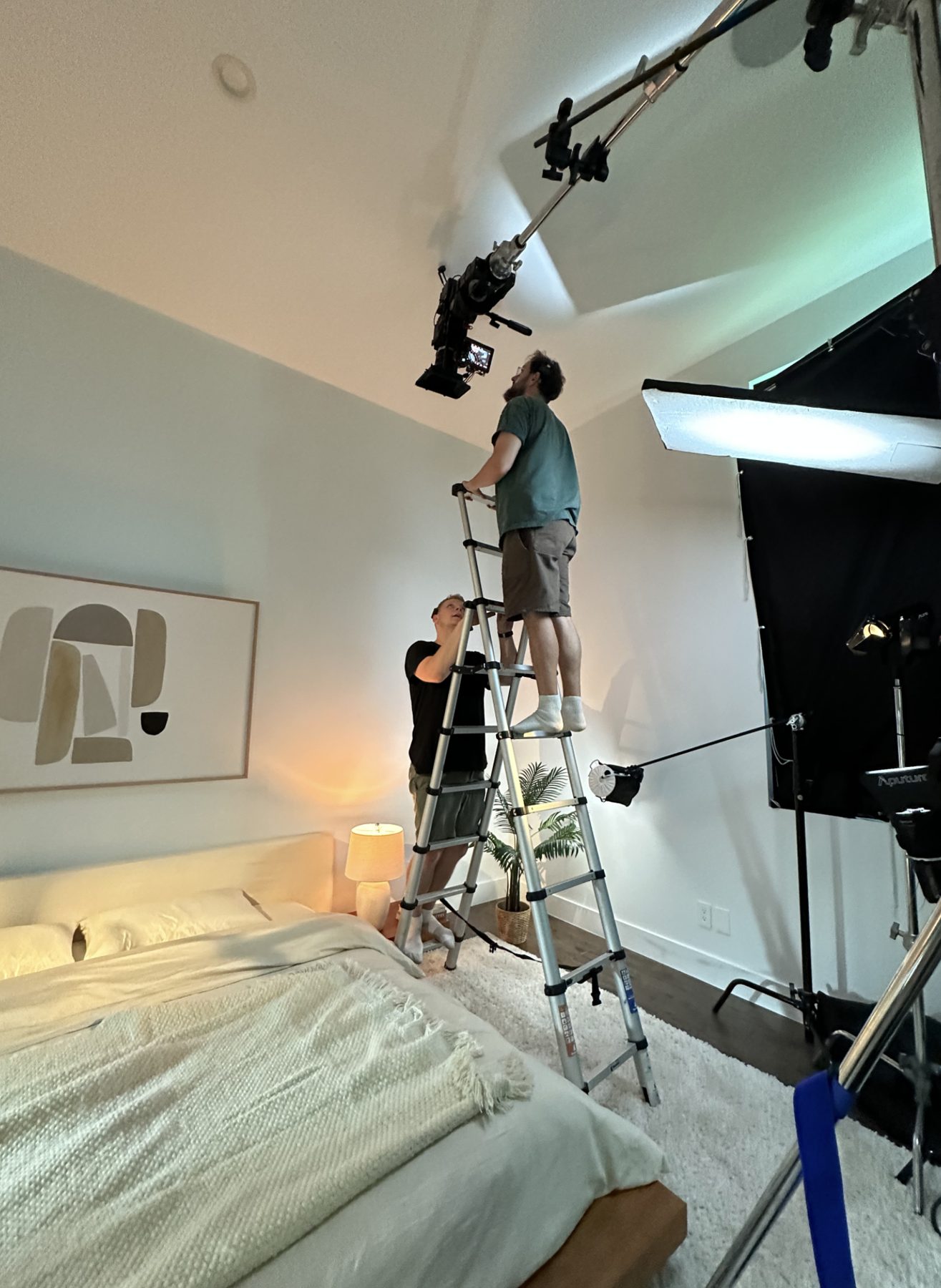
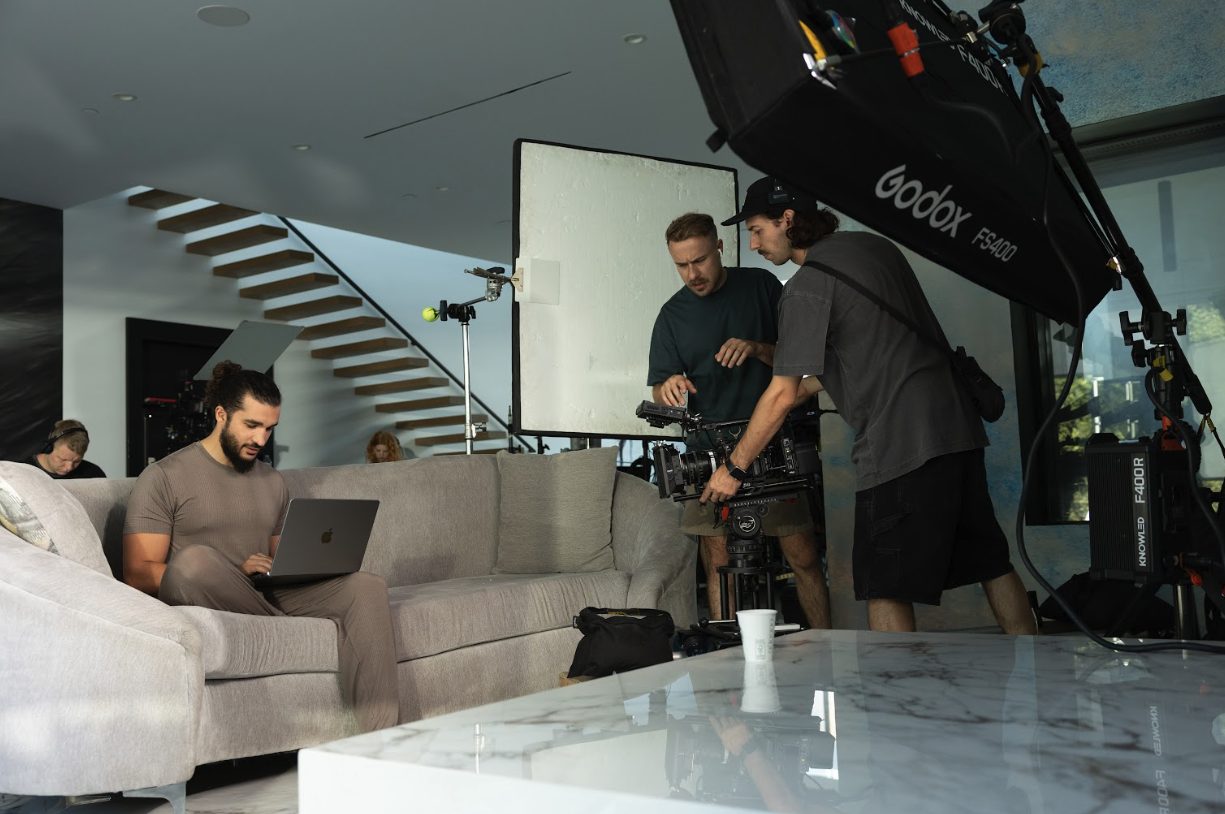
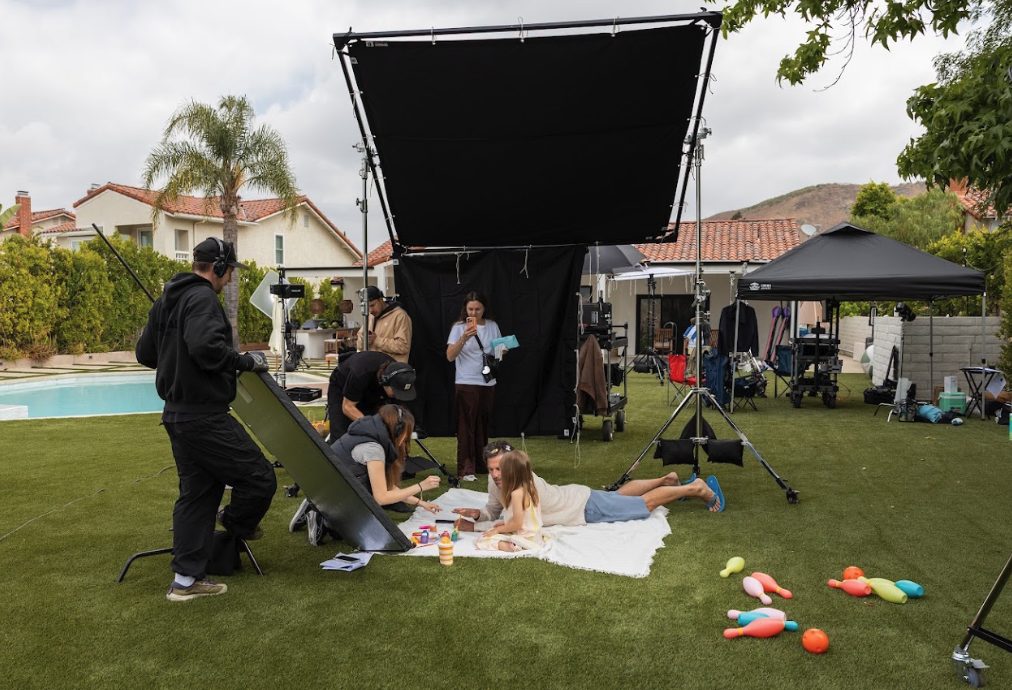
We shot the whole film in one location over a 15-16 hour day, with a large crew. Night scenes, a morning wake-up and bright daytime scenes all came out of the same house, so every hour of the schedule counted.
The client approved every frame, live
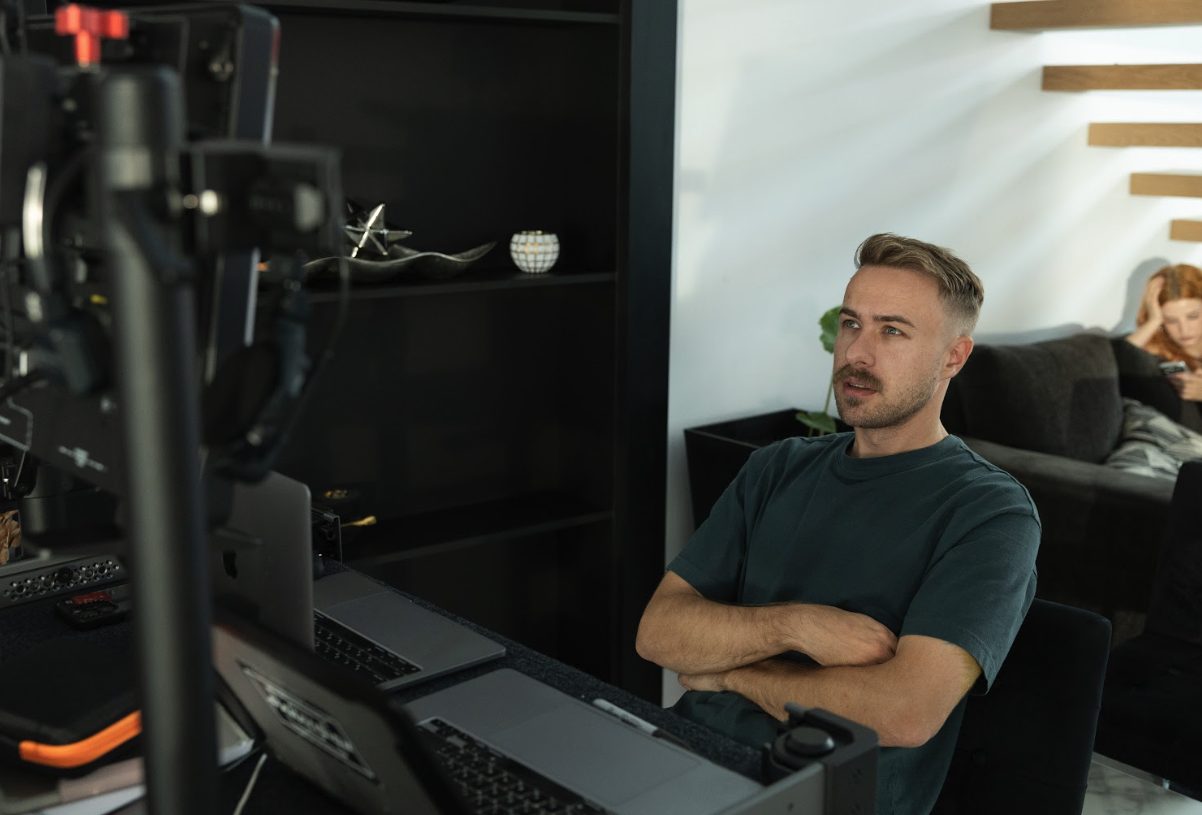
The Moera team was not on set, so we brought the set to them. We streamed the camera feed into a Zoom call, and the client stayed with us for the whole day. Every frame was approved live, before we moved to the next set-up. Nothing waited for a review round after the shoot.
Showing what the camera can't see
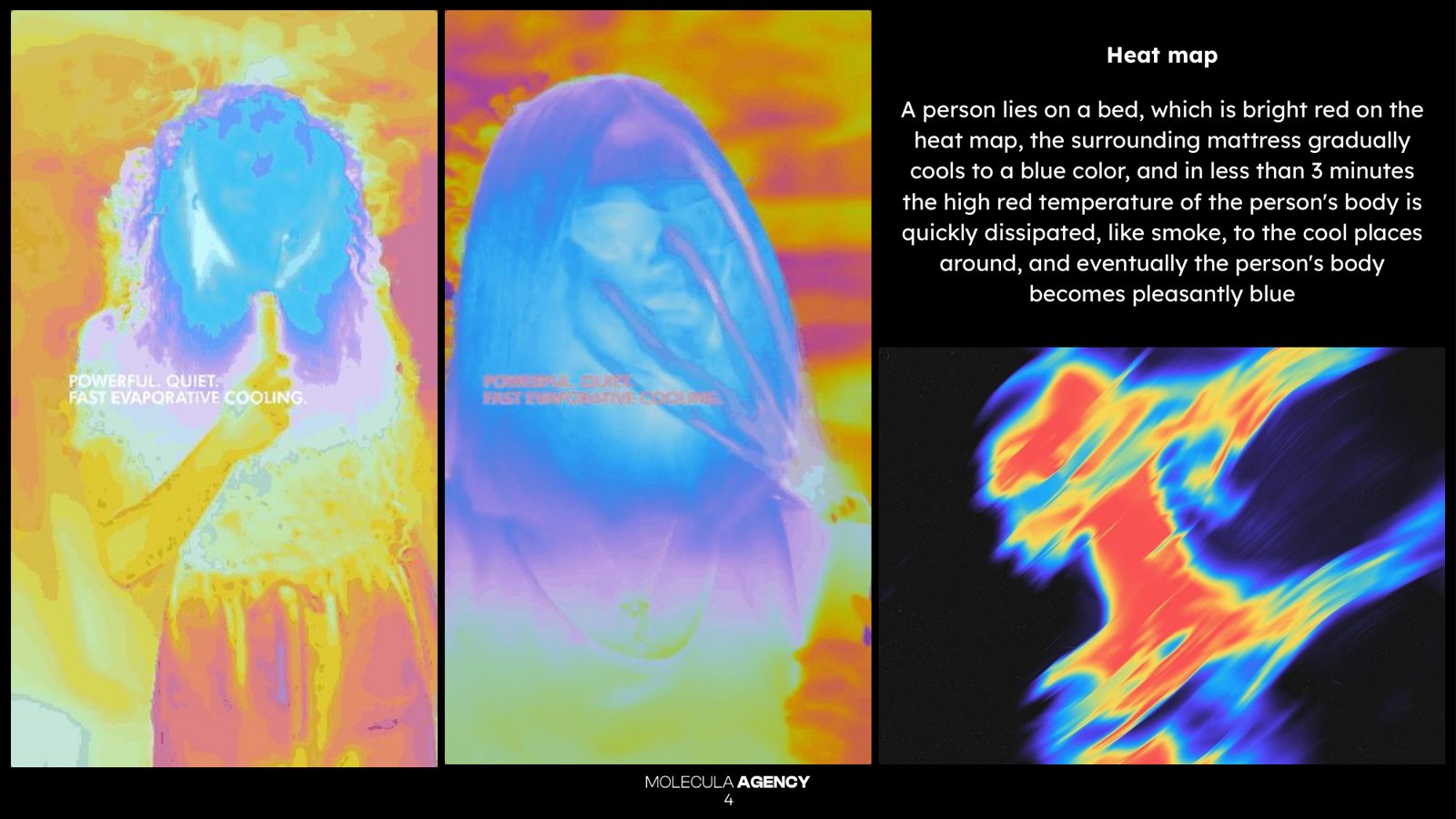
Live action shows the couple and the bedroom. CGI shows the temperature. In the treatment we planned a heat map that starts red around the body and cools to blue as Moera draws the heat away, like a thin layer of warm fog lifting off the sleeper. Interface overlays and 3D product shots fill in the rest.
The result
Moera passed $1M in its first 12 hours on Kickstarter and kept going past $1.77M while the campaign was still live. The campaign got 60 launch assets from the same production.
Keep reading.
17 days to Netflix: how we turned a grey day into Aiper's summer
Aiper bought a Netflix US slot for June 1 before the film existed. The brief arrived on May 13. Our only shoot day in Los Angeles turned out grey, so we built the summer ourselves.

Kickstarter published a case study about Molecula
In April 2026 Kickstarter's partner blog told our story: how two founders started with small crowdfunding videos and built the studio behind six $1M+ campaigns.
 Backstage video
From a desert set to the CES floor: backstage of the DOBOT Rover X1 launch
Four days. Three locations. Seven talents. Five robots, every one of them an early MVP. DOBOT's team flew to Los Angeles to be on set. Two months later our film was playing on their booth at CES 2026.
Let's create your next campaign.
Tell us about your product, timing and the content you need. We come back with a creative direction and a budget, usually within 48 hours.
WeChat: Olegdenysenko
